

Personalized Learning Plans: What They Are + How to Build One
Have you ever tried to teach 25 students who all learn in different ways? It can be confusing and also feel like juggling plates. It is so risky that even if you slip, everything goes into a big crash. But a Personalized Learning Plan (PLP) can calm that chaos. It gives each student a clear roadmap by building a custom path so each kid can learn at a pace that fits them. It also aligns with how they learn best.
What a Personalized Learning Plan Is
A PLP is basically a roadmap created just for one student. This special map includes:
- A snapshot of where a student stands right now
- Clear goals with actual dates to reach them
- Fun activities that match how the student learns best
- Ways to check if they’re getting better
PLPs are dynamic, and these tools change as students grow and learn new things.
Why PLPs Work in Real Classrooms
Kids show up more when they feel noticed, and PLPs help educators do just that. You notice and strengthen gaps, and better yet, point them out before they widen.
Big goals can feel like a tall wall. PLPs turn that wall into steps you can climb. One student can move faster in math, and another can take more time with reading and still feel okay about it.
Also, kids start to lead more. They stop waiting for you to push every move. When students help set goals and pick tasks, they care more. And they stick with it longer.
Key Elements of a Strong PLP
An effective PLP is student-centered. Everyone learns at their own rate. There are multiple options for learning pathways and for demonstrating knowledge.
Smart teachers use quiz scores and work samples as clues about what’s wrong with their students, but don’t forget, their social skills. A section on topics like “asking for ‘help’ or ‘ staying ‘ can boost academic success, too.
How to Build a PLP Step by Step
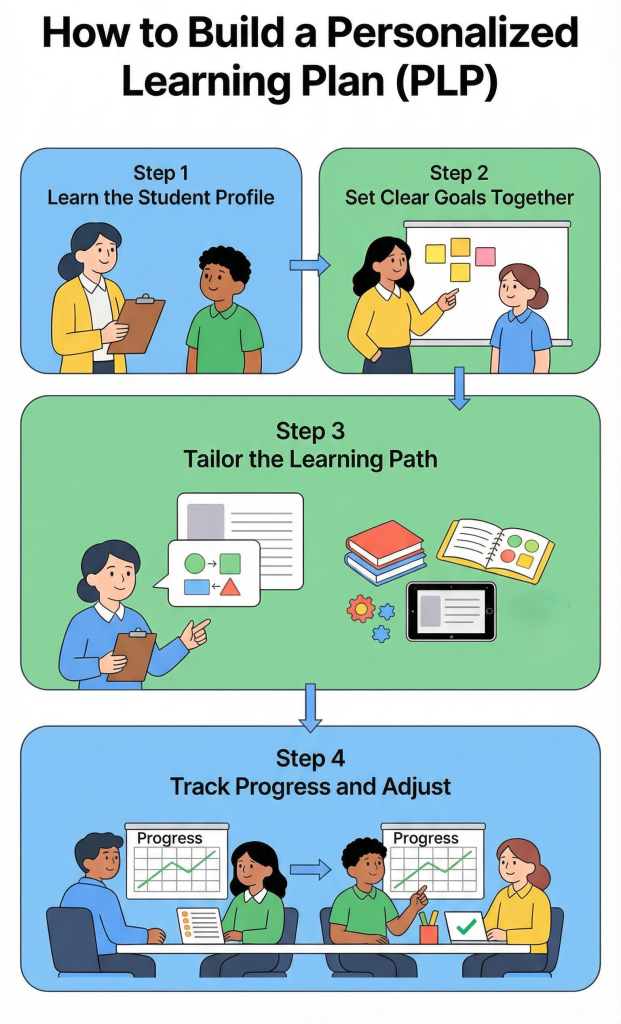
Step 1: Learn the Student Profile
You can start by getting to know your student inside out. You can also mix quick tests with watching them work. Chat with them about what they love and how they learn best. Also, try simple surveys that ask about favorite subjects or tough spots.
And don’t talk to families! Parents often share gold nuggets about how their kids learn at home.
Step 2: Set Clear Goals Together
Sit down with your student and set goals you can reach fast. Small goals beat vague goals every time. “Read 10 sight words by Friday” is clearer than “get better at reading.” It also feels easier to start.
SMART goals also work well. They are Specific, Measurable, Relevant, Time-bound, and Achievable. Also, add one goal about habits, like “I’ll ask questions when I’m stuck.”
Step 3: Plan the Learning Path
Pick activities and resources that fit your student like a glove. If students learn best by moving, add hands-on projects! And if they are visual learners, you can try graphic organizers or videos.
Always give choices: “Would you rather show what you learned through a poster or a short story?” Different kids need different amounts of time, too, and so build that into your plan.
Step 4: Track Progress and Adjust
Check in often. It has to be weekly or every other week. Use quick exit tickets, work samples, or ask how it’s going. Then, it’s the plan if needed.
A PLP that doesn’t bend will not do anything if something isn’t working; you need to fix it right away. No need to wait until report card time.
Tools That Make PLPs Easier
You don’t need special tools to make PLPs work. A simple folder or digital doc works great for keeping track of:
- Goals and deadlines
- Daily or weekly plans
- Notes from check-ins
- Next steps
Some teachers love using learning apps that adjust difficulty based on how students perform. But even sticky notes and a notebook can work magic!